The "F" Words of Chronic Pain - And Why They All Matter
Apr 05, 2026
When people come to me dealing with chronic pain, they usually have one main question.
Why hasn’t the pain gone away?
They've seen the physios, the chiropractors, the massage therapists. They've done the stretching, the exercises. They’ve worked on their posture. They’ve changed the way they stand or sit. Maybe they've had imaging done. And yet, the pain keeps coming back.
Why is that? The answer is what I’ve started calling the “F” words of chronic pain. There are more of them than you might expect. And they're more connected to each other than they might seem.
First — A Quick Word on Pain Itself
Before we get into the "F" words, it helps to understand something basic about how pain works.
Pain isn't a damage meter. It's a protection signal. Your nervous system produces pain when it perceives a threat — not necessarily when something is actually broken or torn. Think of it like an alarm system. The alarm is supposed to go off to warn you. But sometimes, that alarm gets stuck. It keeps going even after the original threat has passed. What often hasn't been explored is a set of patterns — emotional, psychological, nervous system patterns — that can quietly keep pain going long after the original physical cause has settled.
What keeps it stuck? Often, it's the "F" words.
🔴 Fear (seriously, stick with me here)
This is the big one. And it's also the most misunderstood.
Fear in the context of chronic pain doesn't always feel like fear. You don't have to be visibly anxious or scared for it to be active. Fear often shows up as:
-
Constantly checking in on a body part
-
Avoiding certain movements "just in case" or to avoid pain
-
Trying all of the treatments, exercises, and supplements just to get some sort of relief
-
Bracing before you do something you associate with pain
-
Googling symptoms repeatedly, trying to find an explanation
-
Talking about the pain a lot, more than you'd like to
None of that is dramatic or irrational. It's what a nervous system does when it's learned that something in the body is a threat. The problem is that when fear is running in the background — even subtly — it tends to keep the nervous system in protection mode. And a nervous system in protection mode keeps the pain signal going.
More perceived threat, more pain. That's the loop. And that loop will spiral upward the more you show your nervous system this type of fear.
🔴 Focus
Here's something that surprises a lot of people: the more attention you give pain, the more the brain tends to amplify it.
This isn't about ignoring pain or pretending it isn't there. It's about understanding how attention works in the nervous system.
You can think of attention like a spotlight. Whatever the spotlight lands on gets bigger and more prominent. When pain becomes the constant center of attention — checking in on it, tracking it, monitoring it throughout the day — the nervous system takes that as a signal that this thing really matters. And the signal tends to get louder.
This can look like waking up and immediately scanning your body. Or finishing a walk and immediately asking yourself if anything hurts. Or planning your whole day around where the pain might show up.
Again — this isn't something you’ve done wrong or somehow your fault. It's a very understandable response to something that's been disrupting your life. But it can quietly keep the volume turned up on pain.
🔴 Fixation or Fixing
Fixation is slightly different from focus, though they're related.
Fixation is the relentless search for the right answer. The right diagnosis. The right scan. The right treatment that will finally fix this. It makes complete sense — when you're in pain and nothing has worked, you keep looking. That's a reasonable thing to do.
But here's what can happen: the search itself keeps the nervous system on alert. It signals, over and over, that something is wrong, something needs to be solved, something hasn't been found yet. That ongoing alert state can contribute to keeping the pain signal active.
This isn't a reason to stop advocating for yourself or asking questions. It's just worth noticing whether the search has become a source of stress in itself — because if it has, that matters.
🔴 Freak Out
This is the clinical concept of catastrophizing, and it shows up in almost everyone dealing with chronic pain at some point.
Catastrophizing is basically when the mind zooms in on the worst-case scenario. Thoughts like:
-
"This will never get better."
-
"Something must be seriously wrong that they're missing."
-
"If I do that movement, I'll make it so much worse."
-
"This is going to be my life forever."
These thoughts are completely understandable. They're not signs of weakness or negativity. They're what happens when the nervous system has been in threat mode for a long time. The brain starts predicting danger as a default.
The tricky part is that catastrophic thoughts actually amplify pain. The nervous system responds to perceived threat — including the threat of pain itself. So the more the brain anticipates pain, the more ready it is to fire that signal.
Noticing these thoughts — without judging them — is usually the starting point.
🔴 Failure
This one is quiet, but it does a lot of damage.
It's the feeling that your body has failed you. Or that you've failed to get better. That you haven't tried hard enough, or haven't found the right solution, or that other people get better and you haven't. Low self-belief around pain — sometimes called low pain self-efficacy — is a real and well-studied factor in how chronic pain persists.
When someone carries the belief that treatment doesn't work for them, or that they can't handle activity because of the pain, it tends to shrink their world. Movement decreases. Engagement decreases. And both of those things can actually make pain worse over time.
What I want people to hear is this: your nervous system is not broken. It's not betraying you. It's doing exactly what it was built to do. The pattern got stuck — and a stuck pattern is something that can be worked with.
That's not failure. That's complexity. And there's a difference.
🔴 Fatigue
Fatigue is often underestimated in the pain conversation.
Living with chronic pain is genuinely exhausting. Not just physically — though it is that too. But emotionally and mentally. Explaining yourself over and over. Managing appointments. Pushing through. Not being believed. Adjusting plans. All of it takes energy, day after day.
And fatigue matters in a very practical way: when the nervous system is depleted, its threshold for sending pain signals tends to drop. Pain can feel more intense when you're exhausted — not because something is physically worse, but because your system has less capacity to regulate.
This is a reason to take rest seriously — not as giving up or distracting yourself with doom scrolling, but as giving your nervous system what it needs to function better. Rest is not passive. In the context of chronic pain, it's often part of the work.
🔴 Frustration
Frustration is the "F" word that builds slowest and hits hardest.
When you've tried physiotherapy, massage, stretching, medications, and nothing has fully resolved things — frustration is a completely rational response. When you feel dismissed or unheard. When your imaging comes back "normal" but you're still in pain every day. That kind of frustration makes total sense.
What's useful to know is that frustration — like fear, like anxiety — is something the nervous system reads as stress. And chronic stress can genuinely lower pain thresholds and keep the system in a heightened state. Not because you're doing something wrong. But because the body and nervous system are connected in ways that most people were never told about.
Frustration is a signal that something hasn't been addressed yet. It's valid. And naming it — rather than pushing through it or dismissing it — is actually useful.
How These "F" Words Connect
None of these exist in isolation. They tend to feed each other.
Fear increases focus on pain. Focus reinforces fixation. Fixation leads to freak-out thinking. The freak-out thinking fuels the sense of failure. Failure and the ongoing effort lead to fatigue. And when you're fatigued and nothing is working, frustration sets in — which loops right back into fear.
It's a cycle. And the cycle is held together not just by physical factors, but by the way the nervous system has learned to interpret and respond to what's happening.
This isn't about the pain being "in your head." It's in your nervous system. And your nervous system is a physical part of your body. These things are real.
What Can Shift This
Understanding is usually where it starts. Not fixing — understanding.
When someone begins to see how these patterns are operating, it changes the relationship with pain. Movement can become less threatening. Attention can gradually shift. The search for the perfect diagnosis loses some of its urgency. The self-blame starts to soften.
This isn't a quick process for most people, and it doesn't look the same for everyone. But understanding what's keeping the alarm going is usually the first step toward helping it settle.
If you've been living in one or more of these "F" word patterns — and most people with chronic pain have — it might be worth exploring what addressing the nervous system piece could look like.
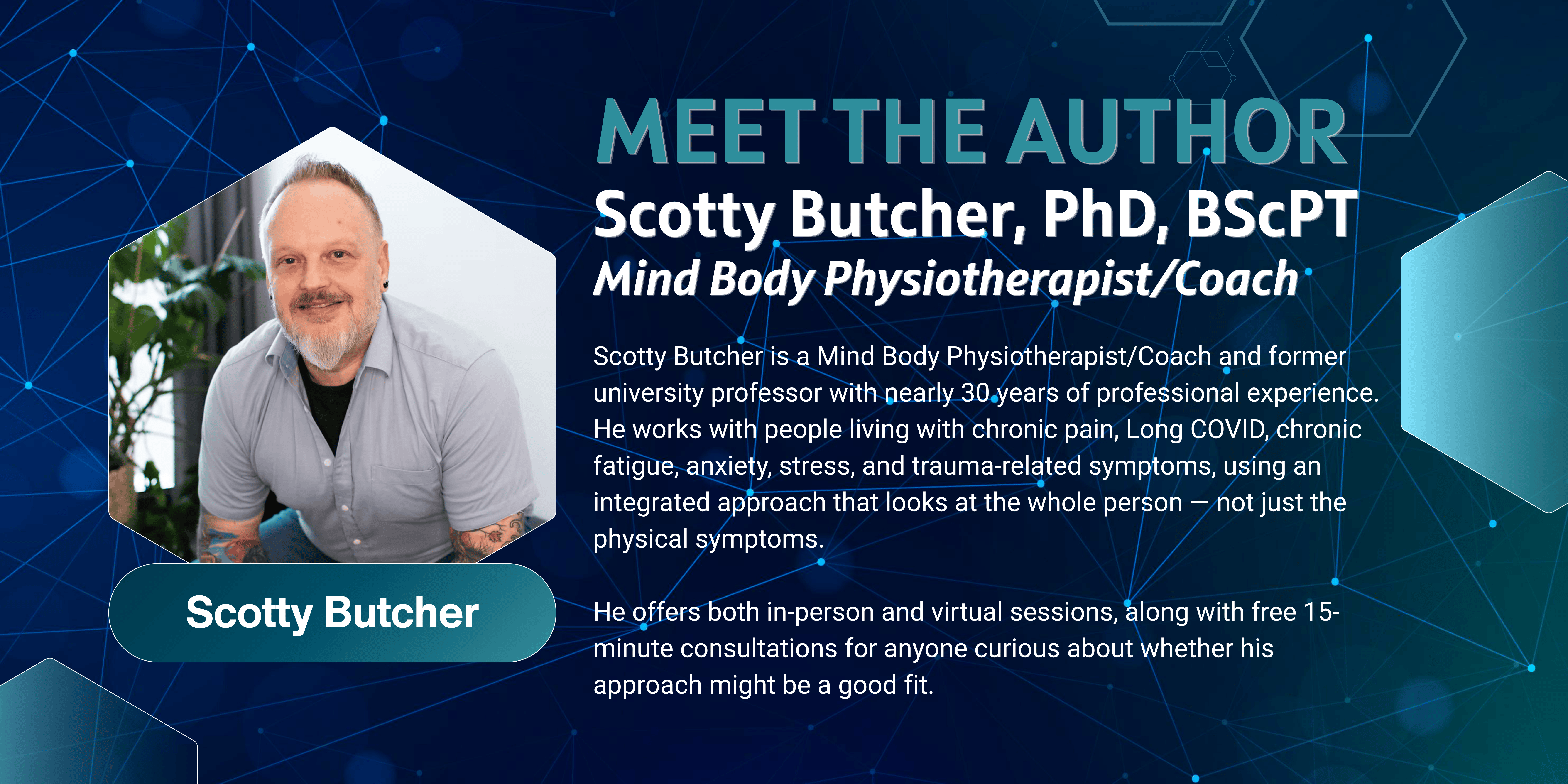
That's exactly the kind of work I do. And if you're curious about whether it applies to your situation, I offer a free 15-minute consultation. No pressure — just a conversation.