Introducing The Mind Body Pain Solution
Oct 24, 2026
If you have been living with chronic pain or persistent symptoms for a while, there is a good chance you have already tried a lot of things. You may have seen physicians, physiotherapists, chiropractors, massage therapists, psychologists, specialists, or other healthcare providers. You may have had scans, bloodwork, medications, injections, exercise programs, dietary changes, or any number of different treatments. Some may have helped, some may not have, and some may have given you relief for a period of time without really changing the bigger picture.
You may also have started learning about pain neuroscience, the nervous system, neuroplasticity, stress physiology, or the mind-body connection. Perhaps you have listened to podcasts, read books, followed people online, or come across an explanation that finally made more sense than simply being told that there is something wrong with your body.
All of that can be valuable, but there is a frustrating gap that I see repeatedly: understanding why you might have symptoms is not the same thing as knowing how to recover from them.
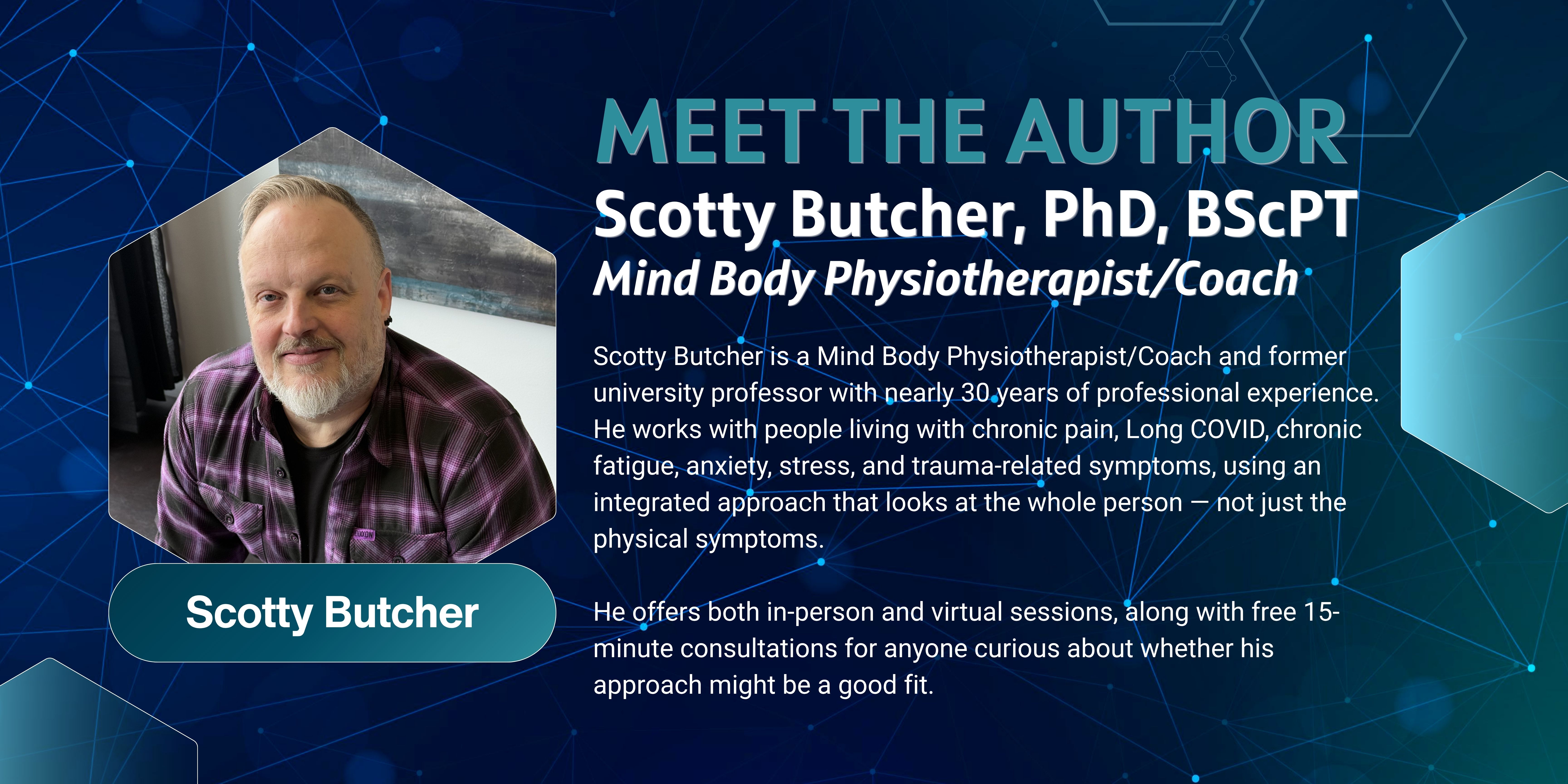
That gap is one of the main reasons I created the Mind Body Pain Solution, or MBPS.
MBPS is a structured recovery program for people living with chronic pain and other persistent symptoms. It brings together education about the brain and nervous system with movement, regulation, emotional and physiological work, behavioural change, graded return to meaningful activity, coaching, and community. More importantly, it is designed to help people move beyond understanding their symptoms and start changing the way they live in relation to them.
Because ultimately, I don't want people to simply become better at managing chronic symptoms. I want them to get their lives back.
When Your Life Starts to Revolve Around Symptoms
One of the challenges with persistent symptoms is that they gradually become part of almost every decision you make. You wake up and check how your body feels. You think about what you did yesterday and whether that explains why you feel the way you do today. Before committing to something next weekend, you wonder whether you will have the energy for it or whether your symptoms will cooperate. Exercise becomes something that has to be carefully negotiated. Travel becomes complicated. Even seeing friends can require planning around how you expect your body to respond.
People often become very good at managing this life. They learn what to avoid, how to pace themselves, what treatments help temporarily, and what they need to do when symptoms get worse. The problem is that even when symptom management becomes more sophisticated, life can continue to get smaller.
This is where I think we need to be careful about how we define recovery.
Symptoms certainly matter, and the goal of MBPS is not to dismiss them or pretend that people should simply ignore what their bodies are telling them. At the same time, if the only acceptable evidence of recovery is the complete disappearance of every symptom, people can end up waiting for permission from their bodies before they start living again.
I want to approach recovery differently. Instead of only asking whether your symptoms are improving, I also want to know whether your life is expanding. Are you doing more of the things that matter to you? Are you becoming less afraid of your body? Are you more confident responding to flare-ups? Are you exercising, working, travelling, socializing, playing with your children or grandchildren, pursuing hobbies, and saying yes to things that you have been avoiding?
Those changes matter because recovery needs to happen in your life, not just on a symptom scale.
Understanding the Nervous System Is Only the Beginning
A major part of MBPS involves learning how the brain and nervous system contribute to persistent symptoms. Our nervous systems are constantly taking in information from the body, the environment, our experiences, expectations, emotions, relationships, and previous learning as they attempt to keep us safe. Sometimes that protective system can become increasingly sensitive and start responding to situations, sensations, movements, or experiences as though they represent more danger than they actually do.
This does not mean that symptoms are imaginary, nor does it mean that every persistent symptom has the same explanation. Symptoms are real experiences, and appropriate medical assessment remains important. What it does mean is that when the nervous system has become part of the problem, simply looking for another structure to treat or another symptom to suppress may not address everything that is contributing to the experience.
The encouraging part is that nervous systems are capable of learning and adapting. Patterns that have developed over time are not necessarily permanent.
Learning this can be tremendously helpful, particularly for someone who has spent years believing that a painful or reactive body must also be a damaged or fragile body. However, education by itself has limitations. You can understand neuroplasticity perfectly well and still become scared when symptoms suddenly increase. You can understand that movement can be safe and still hesitate before going to the gym. You can logically recognize that stress influences your physiology while still finding yourself completely overwhelmed when life becomes difficult.
You can listen to a podcast that makes complete sense on Tuesday and question everything you heard when you are lying awake with symptoms on Sunday night.
That doesn't mean you have failed. It means that knowing something intellectually and teaching your nervous system something experientially are not the same process.
This is where MBPS is different from simply taking another course or learning more information. Education is an important part of the program, but the real work happens when you start applying that understanding to your own life. It happens when you notice a sensation that would normally frighten you and learn to respond differently. It happens when you gradually return to a movement or activity you have been avoiding. It happens when a flare-up occurs and you become curious rather than immediately concluding that you have caused more damage or lost all of your progress. Over time, those experiences can begin to change your relationship with your body.
What Recovery Can Actually Look Like
Consider someone in her early fifties who has been experiencing persistent back and hip pain for several years. She used to enjoy hiking, travelling, and working out, but repeated flare-ups have gradually changed the way she approaches all three. She has stopped lifting heavier weights because she worries that she will make something worse, and long drives make her nervous because sitting has become associated with pain. Before agreeing to a trip, she thinks about the flight, the beds, the amount of walking involved, and what she will do if her back flares up while she is away.
She has actually become quite knowledgeable about her back, but she trusts it less than she ever has.
Her recovery may not begin with waking up one morning and discovering that her pain is gone. It might begin by understanding why her nervous system has become so protective and recognizing that the intensity of a sensation does not always tell her how much danger she is in. From there, she begins experimenting with activities she has become afraid of. She goes for a longer walk. She gradually returns to the gym. A flare-up occurs, but instead of interpreting it as proof that she has damaged herself, she uses what she has learned to settle the system and continue moving forward.
Eventually, she books a weekend away. Months later, she realizes that her back still bothers her occasionally, but it no longer has a vote in every decision she makes.
To me, that is meaningful recovery. The important transformation is not simply that her pain score changed. It is that pain stopped defining the boundaries of her life.
The same principles can apply when pain is not the primary symptom. Imagine someone dealing with fatigue, dizziness, headaches, brain fog, or a number of other persistent symptoms. Over time, unpredictability has taught this person to become extraordinarily cautious. A good day feels encouraging, but it also creates anxiety because doing too much might mean paying for it tomorrow. Plans are made tentatively, activity is carefully calculated, and the person's attention becomes increasingly focused on trying to prevent the next setback.
Recovery in this situation is not about bulldozing through symptoms or pretending that physiological limits do not exist. It involves learning to understand the system more accurately, improving the capacity to respond to stress and physiological activation, changing patterns of fear and avoidance where appropriate, gradually rebuilding capacity, and reconnecting with meaningful activities.
The first important change for this person might simply be going for coffee with a friend without spending the entire time monitoring how they feel. Eventually, it might mean returning to exercise, taking on more at work, travelling, or participating in an activity they thought they had lost.
Again, the transformation is larger than the symptom itself. What changes is the person's confidence, adaptability, participation, and relationship with their own body.
These examples are illustrative rather than stories of specific clients, but they reflect the type of transformation MBPS is designed to pursue.
What Makes MBPS Different
There are already excellent books, podcasts, courses, practitioners, and communities talking about chronic pain, neuroplastic symptoms, and the mind-body connection. I don't think the world needs another program that simply reorganizes the same information into a series of videos.
What I believe is missing for many people is a structured process for turning that information into lived experience.
MBPS organizes that process around six phases of recovery: Awareness, Safety, Capacity, Adaptability, Identity, and Flourishing. These phases are not intended to suggest that recovery happens in a perfectly straight line. It rarely does. Instead, they provide a framework for understanding where you are, what you are working on, and how the different pieces of recovery fit together.
We start by developing a better understanding of symptoms and the patterns that have developed around them. From there, we work on helping the nervous system experience greater safety and improving the ability to regulate when the system becomes activated. As recovery progresses, the focus increasingly shifts toward building physical and psychological capacity, becoming more adaptable in the face of symptoms and stressors, and rebuilding the parts of life and identity that can become lost when someone has been struggling for a long time.
Eventually, I want the work to become less about recovery itself.
There is an interesting trap that can happen when people become deeply involved in this world. They spend so much time meditating, regulating, reading about symptoms, listening to recovery podcasts, tracking their bodies, doing exercises, and trying to heal that recovery itself becomes another full-time job. The nervous system may remain at the centre of life even though the language around it has changed.
I don't want that to be the end point.
The purpose of learning these tools is eventually to need to think about them less. At some point, the hiking trip should just be a hiking trip. Dinner with friends should just be dinner. Exercise should become something you do because you enjoy being strong or active rather than because it is part of your recovery protocol.
Recovery should eventually give way to living.
This is also why MBPS includes coaching and community rather than simply providing educational material. Some of the most difficult moments in recovery happen between appointments and lessons, when symptoms flare, doubt returns, motivation disappears, or life becomes stressful. Those are the moments when having somewhere to ask a question, share what is happening, hear from someone going through something similar, or simply be reminded of the bigger picture becomes valuable.
I don't expect anyone to do this perfectly. You will probably have days when old patterns return. There may be flare-ups that scare you and periods when you wonder whether you are making progress at all. The goal is not to create a nervous system that never becomes activated. Human nervous systems don't work that way. The goal is to build a system that becomes increasingly capable of responding, adapting, recovering, and returning to a sense of safety.
That is a much different definition of resilience than simply trying to stay calm all the time.
The Mind Body Pain Solution Founding Group
I am now opening the Mind Body Pain Solution to its first group of Founding Members. Over eight weeks, we will work through this recovery framework together, combining education with practical application, coaching, accountability, and community support.
I also don't want people to reach the end of eight weeks and suddenly feel as though they are on their own. Meaningful change takes time. There will be experimentation, periods of progress, setbacks, questions, and new challenges as people begin applying this work to increasingly meaningful areas of their lives. For that reason, Founding Members will receive their first year of ongoing MBPS membership as part of the program.
I am intentionally starting with a founding group because I want the people going through MBPS to help influence what it becomes. I want to understand where people get stuck, what questions keep coming up, what support is actually useful, and which parts of the framework help people make the transition from understanding these ideas intellectually to experiencing meaningful changes in their lives.
If you have spent years collecting information, treatments, exercises, strategies, podcasts, and explanations, you may not need another person telling you ten more things you should be doing. You may need a way to put everything together. You may need structure, support, practice, accountability, and people around you who understand what this experience is actually like.
Most importantly, it may be time to stop judging your entire recovery by what your symptoms did today and start paying attention to something bigger.
Is your life getting bigger?
Are you becoming more confident in your body? Are you returning to things that matter to you? Are symptoms occupying less of your attention and influencing fewer of your decisions? Are you beginning to recognize yourself again?
That is the transformation I am interested in.
The Mind Body Pain Solution is not about becoming an expert in managing a smaller life around chronic symptoms. It is about understanding your nervous system, changing the patterns that are keeping you stuck, rebuilding your capacity and confidence, and gradually getting back to being the person you want to be.
That is what I mean when I talk about getting your life back.